
Journal
Microblading Cover-Up in Seoul: Working Over Faded Old Brow Tattoo Pigment
If you are looking for natural microblading or nano brows in Seoul and still have faded pigment from a previous eyebrow tattoo, one of the first questions may be whether the old pigment needs to be removed before having the brows done again.
The short answer is: not always.
If the remaining pigment is light enough and the existing shape does not interfere too much with a new design, a microblading cover-up may sometimes be possible without removal. However, if the old pigment is still dark or strongly defined, I generally recommend removing it first.
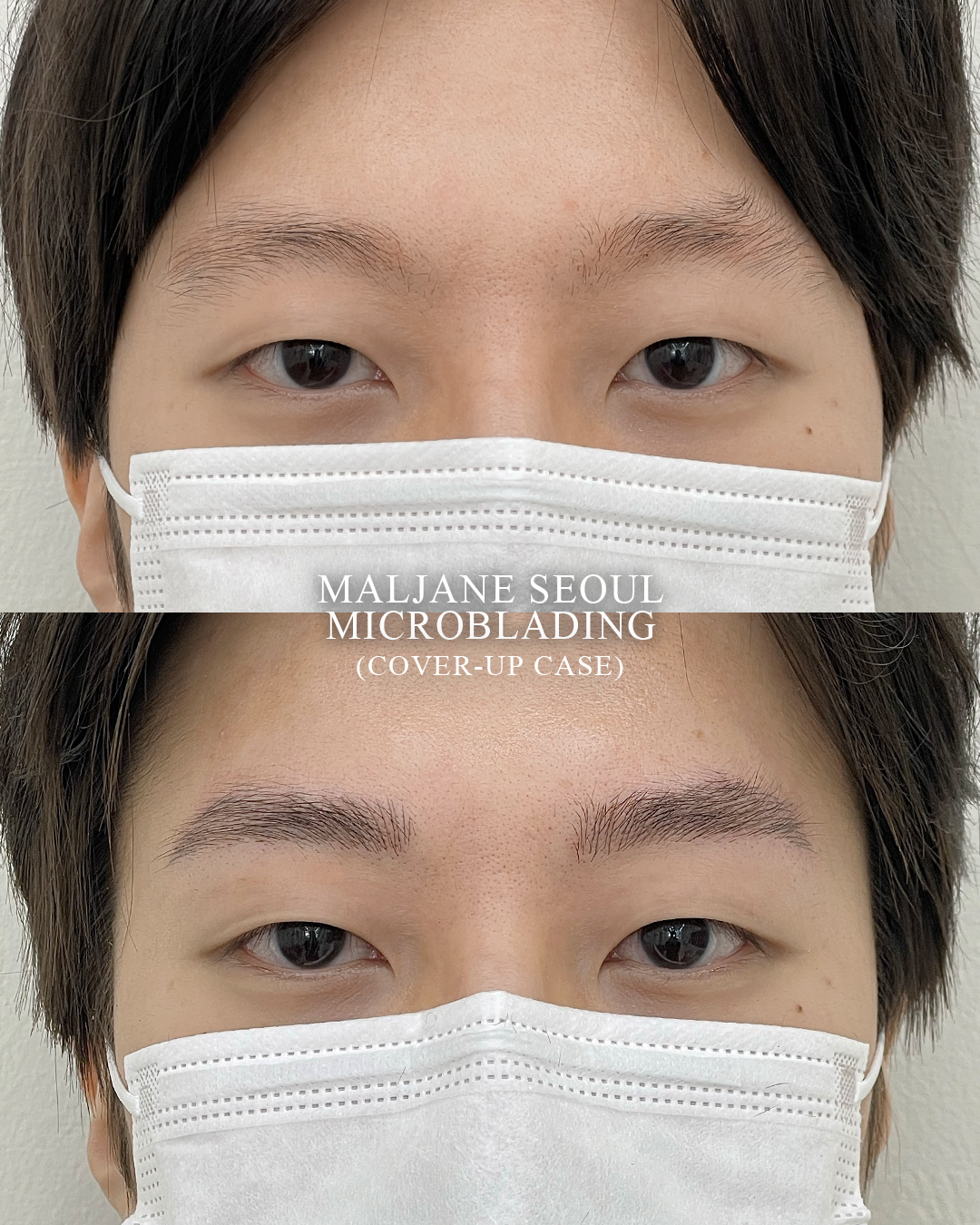
This is one such cover-up case from MALJANE SEOUL.
Why Old Pigment Matters
There are many eyebrow tattoo techniques today—microblading, nano brows, powder brows, combo brows, and others.
Regardless of the technique, some pigment may remain in the skin as time passes after a previous procedure. The amount, color, shape, and visibility of that remaining pigment can vary considerably from person to person.
In this client’s before photos, you can see faded pigment underneath the natural eyebrow hairs.
It was visible, but it was not so dark that it completely controlled the shape of the new brows.
That distinction is important.
Should Old Microblading Be Removed First?
In most cases where the remaining pigment is dark, uneven, or extends outside the shape we want to create, I prefer removal before beginning a new eyebrow procedure.
Starting on a cleaner base gives us more freedom with the new design, color, and stroke placement.
But removal is also a process.
Depending on the old pigment, it may require more than one session, with healing time between treatments. For some clients, going through repeated removal and recovery before having their brows done again may be difficult because of their schedule, travel plans, or other circumstances.
When the old pigment is already sufficiently faded, cover-up work can therefore be another option.
The important point is that cover-up should not simply mean making the eyebrows darker to hide what is underneath.
The old pigment still needs to be considered as part of the new design.
How We Approached This Case
This client was a man in his 20s who wanted the result to look natural.
These days, that preference is certainly not limited to men. Many of our clients want their brows to look more defined without looking obviously tattooed.
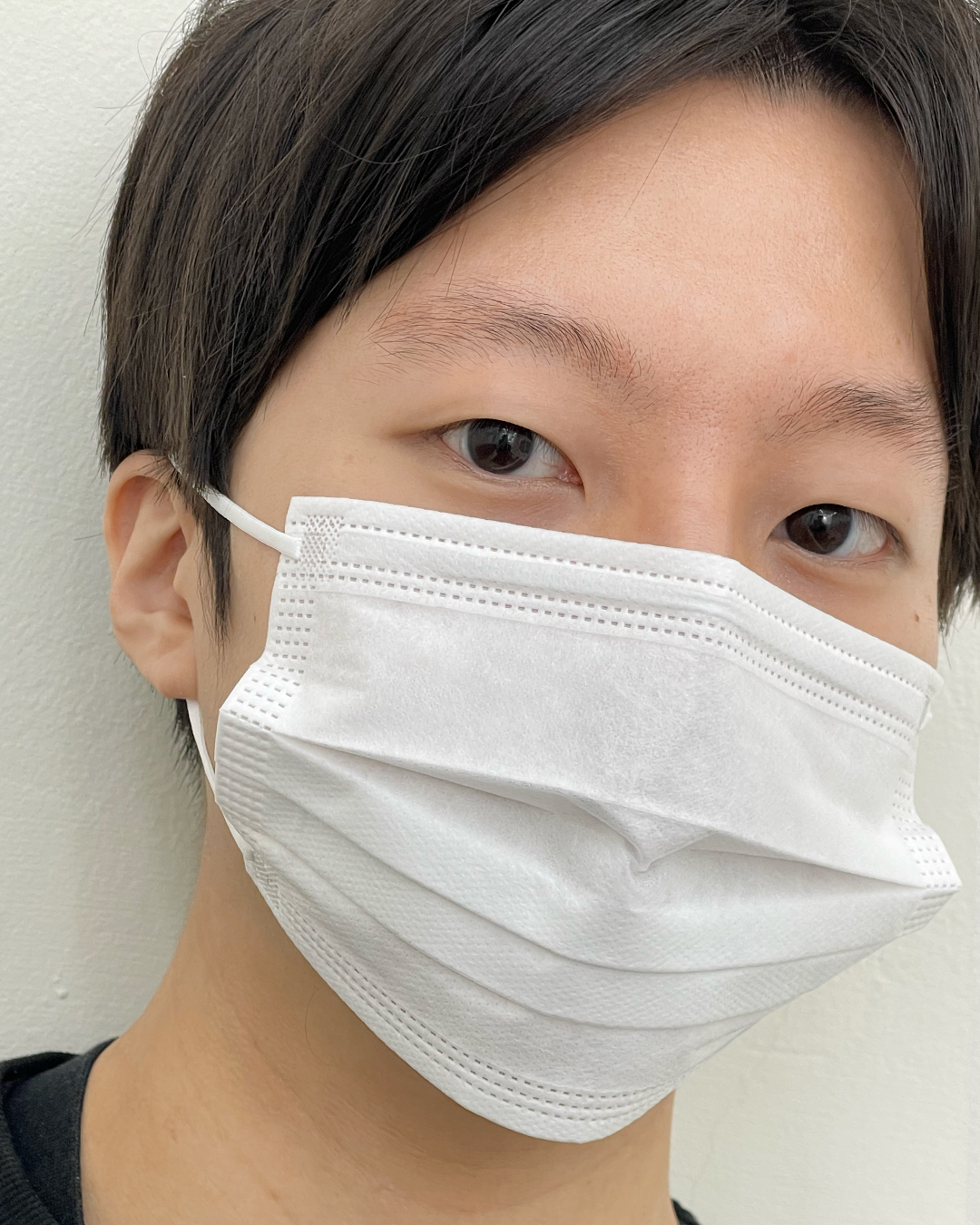
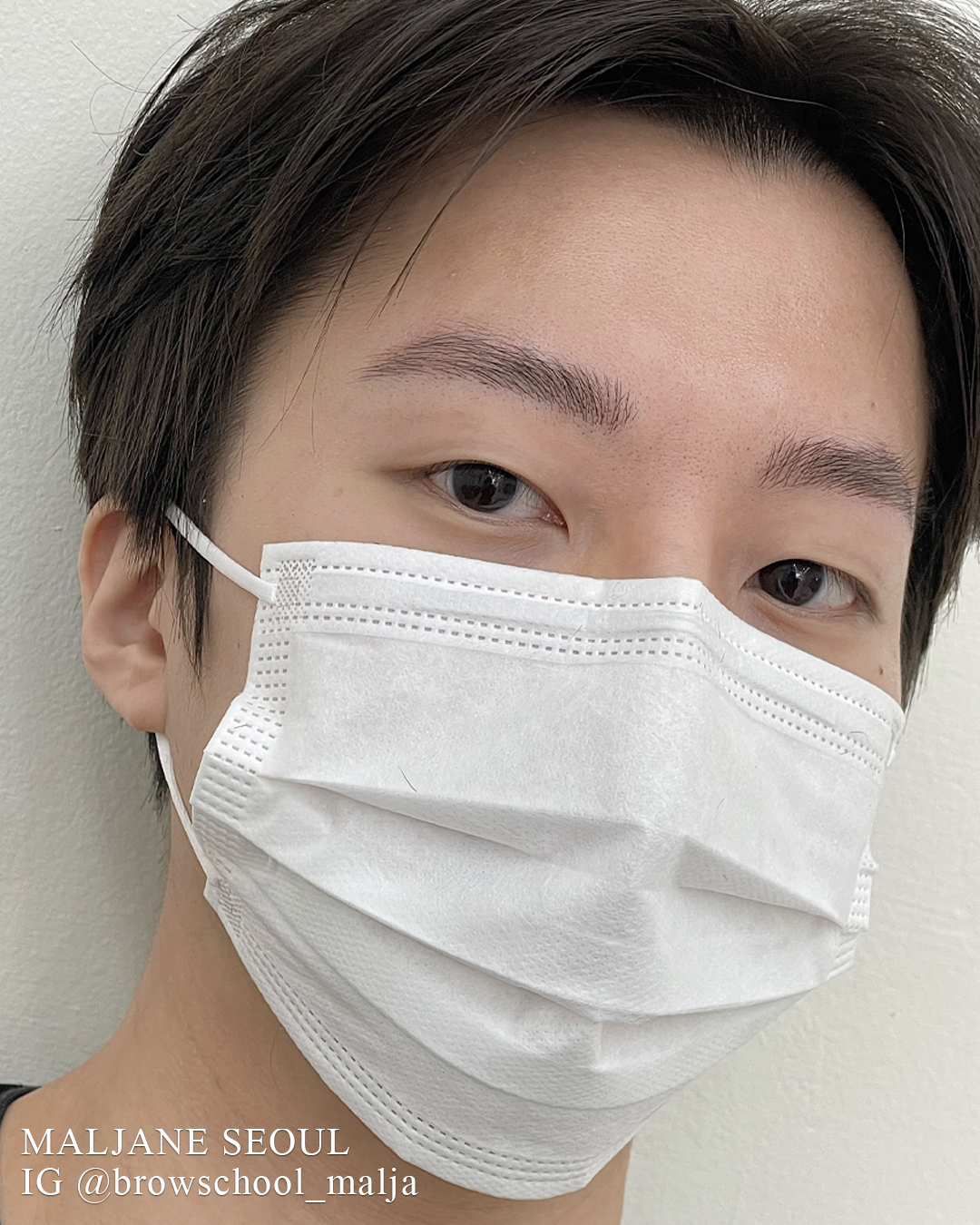
For this case, I tried to preserve as much of the client’s original eyebrow character as possible.
Rather than creating a completely new brow shape over the old pigment, the new microblading strokes were designed around the direction and flow of his existing brow hairs.
The goal was to increase the visual connection between the natural hairs and the new strokes, while also reducing how noticeable the old pigment appeared underneath.
If you compare the before and after photos, the existing brow hairs are still an important part of the final result. The new strokes support them rather than completely covering them.
When Can a Microblading Cover-Up Be Considered?
There is no single rule that applies to every old eyebrow tattoo.
But in general, a cover-up may be worth considering when the previous pigment has faded enough, the old shape does not strongly conflict with the new design, and a natural result can still be created without making the brows unnecessarily dark.
If the old pigment is too dark, too saturated, or significantly outside the desired brow shape, removal is usually the direction I would recommend first.
This is why I do not think the decision should simply be “cover-up or removal” before the existing brows are actually assessed.
The condition of the old pigment matters.
For someone who has faded previous microblading or an old eyebrow tattoo and wants natural-looking brows in Seoul, this case is one example of what may be possible without removing everything first.
But when removal gives us a better foundation for the long-term result, I would still recommend removal.
What do you think of this cover-up result?