
Journal
How to Choose a Microblading Studio in Seoul: 3 Ways to Avoid Bad Results
Choosing a microblading or eyebrow tattoo studio can be difficult when you do not have professional knowledge.
Most people naturally judge an artist by the polished before-and-after photos they see on Instagram.
That is completely understandable—but a beautiful portfolio does not always show how the brows look in person or how they heal over time.
I have worked as a PMU artist in Seoul for more than 12 years, and I regularly meet clients who have spent weeks researching Korean beauty studios before booking.
Some are local residents, while others are international travelers who may have only one opportunity to receive the procedure during their trip.
Whether you are looking for an artist in your hometown or planning to get microblading in Seoul,
these three checks can significantly reduce the risk of unnatural, overly dark, or poorly healed eyebrows.
Quick Answer: What Should You Check Before Booking?
Before choosing a microblading studio, check whether the artist:
- Shows clear, close-up photographs without skin-blurring filters
- Designs hair strokes according to each client’s natural eyebrow growth pattern
- Provides healed results, not only photographs taken immediately after the procedure
These three points reveal far more about an artist’s actual skill than follower counts, certificates, trophies, or heavily styled Instagram content.
1. Avoid Portfolios That Rely on Blur Filters or Heavy Editing
South Korea is well known for precise and meticulous beauty techniques. However, the quality of microblading still varies greatly from one studio to another.
Editing applications can make an average result look exceptionally clean. Skin-smoothing filters remove pores, redness, swelling, and small imperfections. They can also soften harsh or uneven hair strokes, making them appear finer and more natural than they really are.
You do not need to be a photographer to recognize excessive editing. Look closely for these warning signs:
- The skin has almost no visible pores or natural texture
- The eyebrow strokes look strangely soft or out of focus
- The skin around the brows looks different from the rest of the face
- Every client appears to have exactly the same flawless skin
- Only distant or angled photographs are shown, with no clear frontal close-ups
A filtered photograph can hide a result that looks much darker, thicker, or harsher in person. Skilled artists should be confident enough to show real skin texture because clients deserve to understand what they are actually booking.
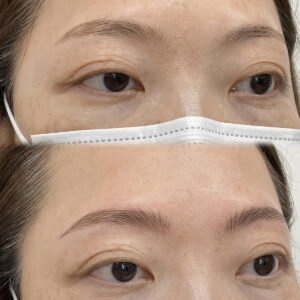
The photographs shown with this article are examples of my own work at MALJANE SEOUL and have not been retouched or filtered.
2. Make Sure the Hair Strokes Follow Your Natural Brow Growth
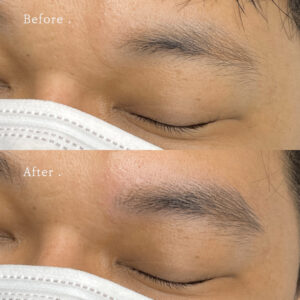
Natural eyebrow hairs do not grow in one universal pattern. The hairs at the front, middle, arch, and tail can grow at completely different angles.
Their direction also varies according to the individual’s facial structure, muscle movement, hair density, age, and natural asymmetry.
Despite this, some high-volume studios use nearly identical stroke patterns for every client. A standardized pattern is faster and easier to repeat, but it can look disconnected from the client’s real eyebrow hair.
Natural-looking microblading should not simply place fine lines inside a predetermined eyebrow outline. The implanted strokes should visually connect with the client’s existing hairs and continue their natural movement.
Before booking, compare several clients in the artist’s portfolio and ask yourself:
- Do all clients appear to have the same stroke pattern?
- Do the strokes change according to each person’s natural hair direction?
- Does the front of the eyebrow blend naturally with the existing hair?
- Are facial asymmetry and differences in eyebrow height considered?
- Does the final design suit the client’s entire face rather than following a fixed template?
Certificates and awards may provide background information, but they should never replace close examination of the artist’s actual work. The most reliable evidence is consistent customization across many different faces.
The natural look that clients want does not come from making every stroke extremely thin. It comes from matching the direction, spacing, density, and movement of each person’s real eyebrow hair.
3. Always Check Healed Microblading Results

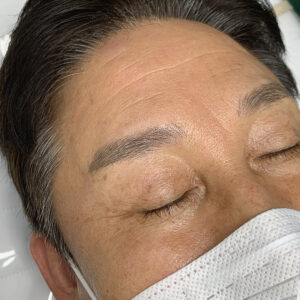
before & healed
Photographs taken immediately after microblading can show clean and impressive hair strokes. However, the true quality of the procedure can only be evaluated after the skin has healed.
This is particularly important for international travelers receiving microblading in Korea. Many visitors return home shortly after the procedure and may not be able to come back to Seoul for a touch-up.
A healed portfolio helps answer three essential questions.
Did Enough Pigment Remain After the Peeling Stage?
If nearly all of the pigment disappears, the client may be left with little visible improvement and may depend heavily on an additional session.
Did the Strokes Remain Separate and Visible?
Well-healed hair strokes should retain enough definition to resemble natural eyebrow hairs. They should not merge into one heavy block.
Did the Color Heal Naturally?
When pigment is implanted too deeply or the skin is excessively traumatized, the strokes may spread, blur, or gradually develop an unnatural gray, red, or solid appearance.
This is why healed work is one of the most useful ways to evaluate a microblading artist.
It shows not only how the artist creates the initial strokes, but also whether the technique, depth, pigment choice, and density remain balanced after recovery.
Healed photographs are also more difficult to present convincingly through simple filters. For that reason, studios with consistent long-term results usually make healed cases an important part of their portfolio.
A 30-Second Microblading Studio Checklist
Before paying a deposit, check the following:
- Clear frontal and close-up photographs
- Visible pores and real skin texture
- Different designs and stroke patterns for different clients
- Examples similar to your age, gender, skin type, and existing eyebrow condition
- Healed results photographed several weeks or months later
- Clear pricing and touch-up policies
- Honest explanations about previous eyebrow tattoos, oily skin, scars, and possible limitations
- A consultation process that examines your existing hair growth and facial asymmetry
A trustworthy artist should be able to explain not only what they can do, but also what may not be suitable for your skin or existing eyebrow condition.
Frequently Asked Questions
How Can I Tell Whether a Microblading Photograph Has Been Edited?
Look for missing pores, excessively smooth skin, blurred stroke edges, inconsistent skin texture around the eyebrows, and portfolios that avoid clear frontal close-ups.
Why Are Healed Microblading Results More Important Than Same-Day Photographs?
Same-day photographs show the artist’s initial design and technique.
Healed photographs reveal pigment retention, stroke separation, color stability, and whether excessive depth or skin trauma caused the result to spread or blur.
Should Every Client Receive the Same Microblading Pattern?
No.
A natural result requires the stroke direction, spacing, density, and overall shape to be adapted to the client’s real hair growth, facial structure, and natural asymmetry.
Final Thoughts
A good microblading result should not simply look impressive in a filtered Instagram photograph.
It should look natural on the client’s face, blend with the existing eyebrow hairs, and remain attractive after the skin has fully healed.
Before choosing a studio, take a few minutes to examine unedited close-up photographs, compare the stroke patterns used on different clients, and look carefully at healed results.
These three checks can help prevent months or even years of regret, corrective procedures, and the stress of laser removal.
I wrote this guide because I want everyone visiting Korea to leave with beautiful brows and good memories, not regret.
Written by Sung Sang Wook, Founder and PMU Artist at MALJANE SEOUL.
With more than 12 years of experience in microblading and eyebrow design, he specializes in natural, customized eyebrows based on each client’s facial structure, hair growth, skin condition, and long-term healed results.
Updated: July 2026
A shorter and more informal version of this guide was originally shared by the author on Reddit.
Published: July 25, 2026 / seoul.
https://microbladinginseoul.com/services-pricing/eyebrow-tattoo-seoul/